
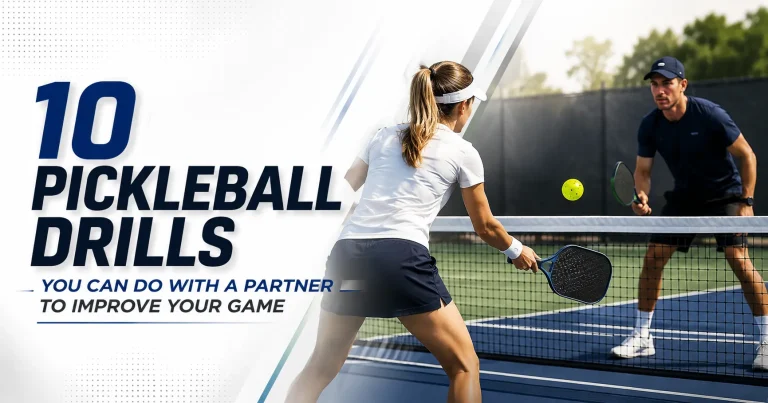
If you want to get better at pickleball fast, grab a partner and start drilling. Playing games is fun, but repeating the same shot over and over is what actually builds muscle memory. That’s why pickleball drills with a partner are one of the smartest ways to sharpen your skills, whether you’re brand new to the sport or already competing in local tournaments.
These drills cover everything from dinking and volleys to the third shot drop, one of the toughest shots in the game. Whether you’re searching for pickleball drills for beginners or looking for structured pickleball practice with a partner, this list has something for every skill level.
Why Practicing With a Partner Works So Well
Solo practice has its place, but nothing replicates real match conditions like hitting with another person. A partner gives you live ball speed, unpredictable placement, and honest feedback, three things a wall or ball machine simply can’t offer. Regular pickleball practice with a partner also helps you build consistency under pressure, which is exactly what you need when a real match gets tight.
Now let’s get into the drills.
1. The Dink Rally Drill
This is one of the most important pickleball drills for beginners because it teaches soft hands and patience. Stand at the kitchen line facing your partner, who is also at their own kitchen line. Hit soft, controlled dinks back and forth, aiming to keep the ball low and inside the kitchen box.
How to do it: Rally for as long as possible without letting the ball bounce too high or fly past the kitchen line. Count your longest streak and try to beat it each session.
2. Cross-Court Dinking Drill
Once straight-ahead dinking feels comfortable, move to cross-court dinks. Stand diagonally from your partner and hit dinks only to the opposite side of the kitchen.
Why it matters: Cross-court shots give you more room for error and are commonly used in real matches, especially during doubles play near the net.
3. Third Shot Drop Drill
The third shot drop is often called the most important shot in pickleball, and it deserves its own dedicated practice time. After the serve and return, the serving team usually needs to “drop” the ball softly into the kitchen so they can safely move up to the net.
How to do it: One partner stands at the baseline and feeds a return-style shot. The other partner practices hitting a soft, arcing shot that lands inside the kitchen. Repeat 15 to 20 times, then switch roles. This pickleball third shot drop drill alone can transform your net game because it forces you to control pace instead of overpowering the ball.
4. Serve and Return Drill
Consistent serves and returns set the tone for every point. Take turns serving to specific zones on the court while your partner practices returning deep and with control.
Bonus tip: Place a towel or cone in the target zone to give yourself something to aim at. This small addition makes the drill far more effective than just hitting randomly.
5. Volley Wall Drill (No Wall Needed)
Despite the name, this drill just needs you and your partner standing a few feet apart at the kitchen line, hitting quick volleys back and forth without letting the ball bounce.
Why it works: This builds fast hands and reaction time, both essential for those quick net exchanges that decide close points.
6. Two-Bounce Rule Practice
New players often forget the two-bounce rule, which requires the ball to bounce once on each side before volleys are allowed. Set up a mini match where you only play points that start with the two-bounce sequence.
Who it’s for: This is one of the best pickleball drills for beginners because it builds the habit early, before it becomes a match-day mistake.
7. Target Practice Drill
Place cones, hula hoops, or towels in different areas of the court, such as the corners or the kitchen line. Take turns trying to land shots directly on or near the targets.
How to score it: Give yourself points for each target hit and track your progress over several sessions. This drill sharpens accuracy far more than simply hitting the ball back and forth.
8. Transition Zone Drill
The transition zone, sometimes called the “no man’s land,” is the tricky middle area of the court between the baseline and the kitchen. Practice moving through this zone safely with your partner by alternating between deep shots and soft drops as you both move forward together.
Goal: Reach the kitchen line without getting caught out of position, a common issue for newer players.
9. Fast Hands Reaction Drill
Stand close to your partner at the net, about half the usual distance, and hit quick, soft volleys aimed near each other’s body or paddle side. This forces fast reactions and sharpens your reflexes for real match speed.
Safety tip: Keep the pace controlled at first and only speed up once both players feel comfortable and in control.
10. Game-Style Point Play
After working through individual drills, put it all together with short, game-style points. Play to five, focusing on using the specific shot you just practiced, whether that’s the third shot drop, a cross-court dink, or a controlled serve.
Why this matters: This final step bridges the gap between drilling and real match play, helping the movement feel natural instead of mechanical.
Tips to Get the Most Out of Your Practice Sessions
- Practice two to three times a week for the best results.
- Keep sessions between 20 and 45 minutes to avoid burnout.
- Focus on one or two drills per session rather than rushing through all ten.
- Track small wins, like longer dink rallies or cleaner third-shot drops.
- Switch roles often so both players benefit equally from each drill.
Common Mistakes to Avoid During Partner Drills
Even with the right drills, a few habits can slow down your progress. Watch out for these common mistakes:
- Rushing the third shot drop. Many players try to hit it too hard, sending the ball long instead of letting it drop softly into the kitchen. Slow down and focus on arc, not speed.
- Skipping the basics. It’s tempting to jump straight into advanced drills, but pickleball drills for beginners like the dink rally build the foundation everything else depends on.
- Not switching roles. If one partner always feeds and the other always hits, only one player improves. Rotate roles every few minutes so both of you benefit.
- Practicing without a goal. Random hitting feels productive, but it rarely translates to match improvement. Set a target, a shot count, or a rally length before you start.
- Ignoring footwork. Good hands matter, but pickleball is also a movement sport. Pay attention to how you step into each shot during every drill, not just where the ball lands.
Fixing even one of these habits can make your pickleball practice with a partner far more productive, and you’ll likely notice the difference within just a few sessions.
Final Thoughts
Improving at pickleball doesn’t require fancy equipment or a coach standing beside you. With just a partner, a paddle, and a bit of consistency, these pickleball drills with a partner can help you build real, lasting skills. Start with the basics, spend extra time on the third shot drop drill, and slowly work your way through the full list. Your consistency, control, and confidence on the court will improve faster than you expect.
Frequently Asked Questions
How often should I practice pickleball drills with a partner?
Practice pickleball drills with a partner two to three times weekly for twenty to thirty minutes to see real gains in your dinks, serves, and third shot drop.
Are these pickleball drills for beginners suitable for new players?
Yes, pickleball drills for beginners like the dink rally, serve and return, and volley wall drill are perfect since they build control before speed and power.
What is the third shot drop drill in pickleball?
The third shot drop drill is a controlled shot hit after the return of serve that lands softly in the opponent’s kitchen, helping you move safely to the net.
What equipment do I need for partner drills?
You need just a paddle, a few balls, a partner, and access to a court. Cones or a rope help mark targets so your practice stays focused and productive.
Is pickleball practice with a partner better than solo practice?
Yes, doing pickleball practice with a partner is one of the fastest ways to improve because you get real-time feedback, realistic ball speed, and game-like reps.